
There's a rule in this business that nobody writes down but everybody knows: you can't buy a cultural moment. You can only show up for it in a way people remember.
So when Netflix stepped onto the live-event stage — streaming's biggest, loudest, most-watched moment yet — the question wasn't "how do we run an ad?" It was "how do we make sure the whole world knows we belong here?" That's a very different question. And it has a very good answer.
A blimp.
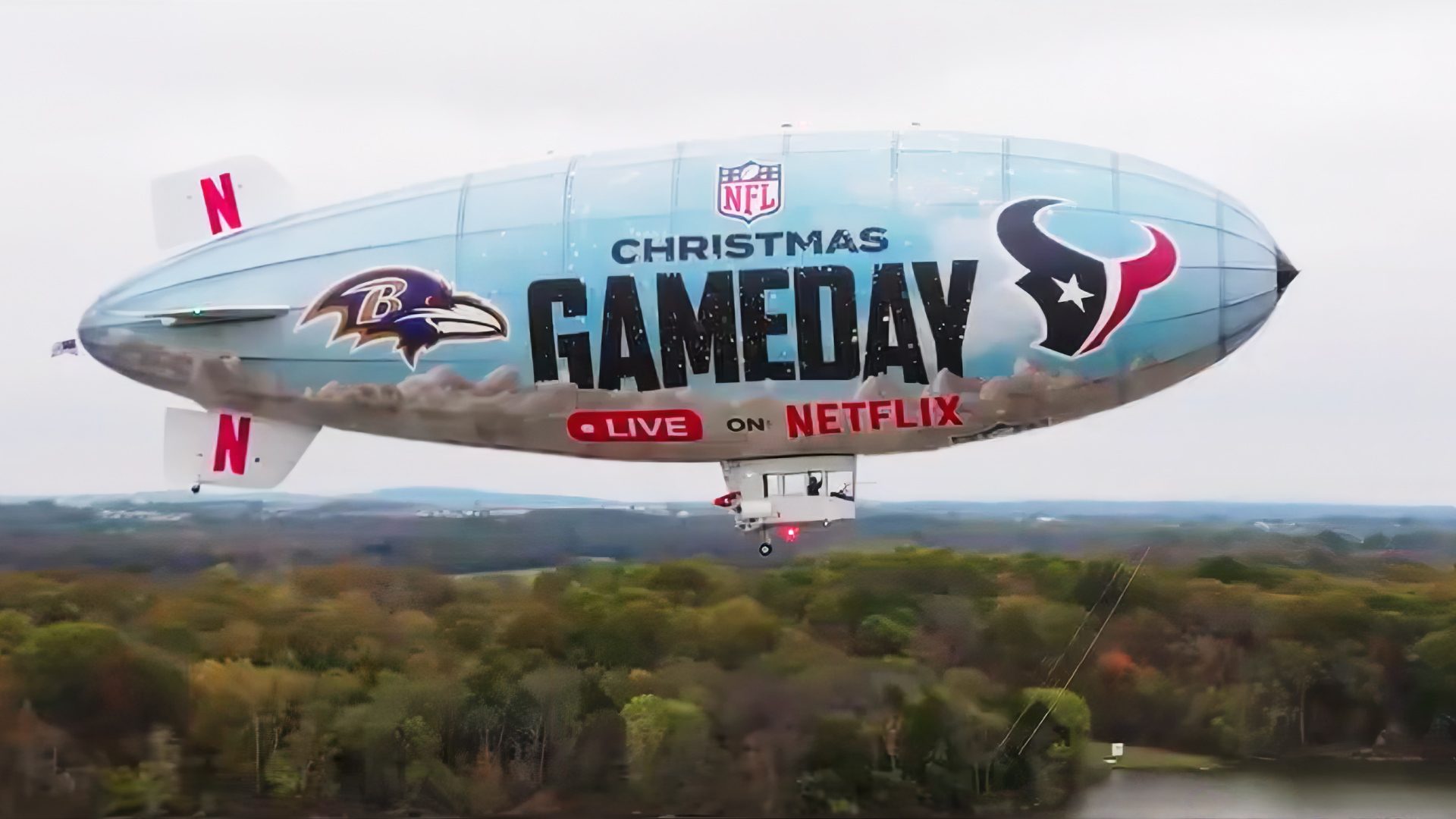
We wrapped an airship for the Netflix Game Day and floated it over the action, and here's what happened next: the blimp stopped being an ad and started being the story. People pointed. People filmed. Clips of the Netflix Game Day blimp spread across feeds faster than any thirty-second spot ever could, because a blimp overhead is the rarest thing in modern advertising — genuinely surprising.
The internet does the heavy lifting
Let's talk about that for a second, because it's the whole game. Most advertising asks you to reach an audience. Great advertising gets the audience to reach each other for you. When a Netflix blimp glides over a live event that millions are already watching, you don't have to beg people to engage. They engage on instinct. They share, they tag, they argue about it in the comments — and every one of those interactions is a free impression stamped with your logo.
A screen ad interrupts the show. The blimp was a show. And a brand that becomes a show doesn't get skipped. It gets talked about.
Why the sky, and why now
Netflix was making a statement: we're a live destination now. You don't make that kind of statement quietly. You make it 1,000 feet in the air, over the exact crowd you're trying to win, in a way that broadcast cameras can't resist cutting to and phones can't resist filming.
That's the beauty of an airship. It doesn't just deliver impressions — it delivers a moment worth capturing. And in a world where attention is the whole currency, the brand that owns the moment owns the day.
Now here's why that matters for any brand, not just a streaming giant. Aerial advertising doesn't rent you a sliver of someone else's attention — it hands you the entire sky over the exact crowd you're chasing. No auction to win, no algorithm to please, no ad-block to dodge. Just your logo, floating over the moment everyone is already looking at, for as long as you want it there.
And the numbers follow the spectacle. A blimp over a marquee live event doesn't deliver a handful of impressions — it delivers millions, plus a second wave of earned media as broadcast cameras cut to it and social feeds fill with it. That's the multiplier no thirty-second spot can match: one flight, seen live, then re-shared for days.
That's the real headline for marketers. A blimp doesn't just show up at the moment — it becomes a moment of its own, one the audience is delighted to capture and pass along. Netflix wanted to plant a flag in live entertainment, and an airship let them do it in the boldest, most shareable way imaginable. Any brand can borrow that same play: find the event your audience already loves, and own the sky above it.
Become the moment, not the interruption.
Screen ads get skipped. Billboards get passed. An airship over a live event becomes content people choose to share — the highest-engagement out-of-home format there is. It turns your audience into your media team, for free.
Now picture your brand up there. That's what an airship does — it launches you sky-high: millions of impressions, viral by nature, impossible to scroll past. Not an ad people tolerate — a moment they can't stop sharing. And Skyship Services owns and operates the fleet, so one team takes you from the first call to the final flight.