
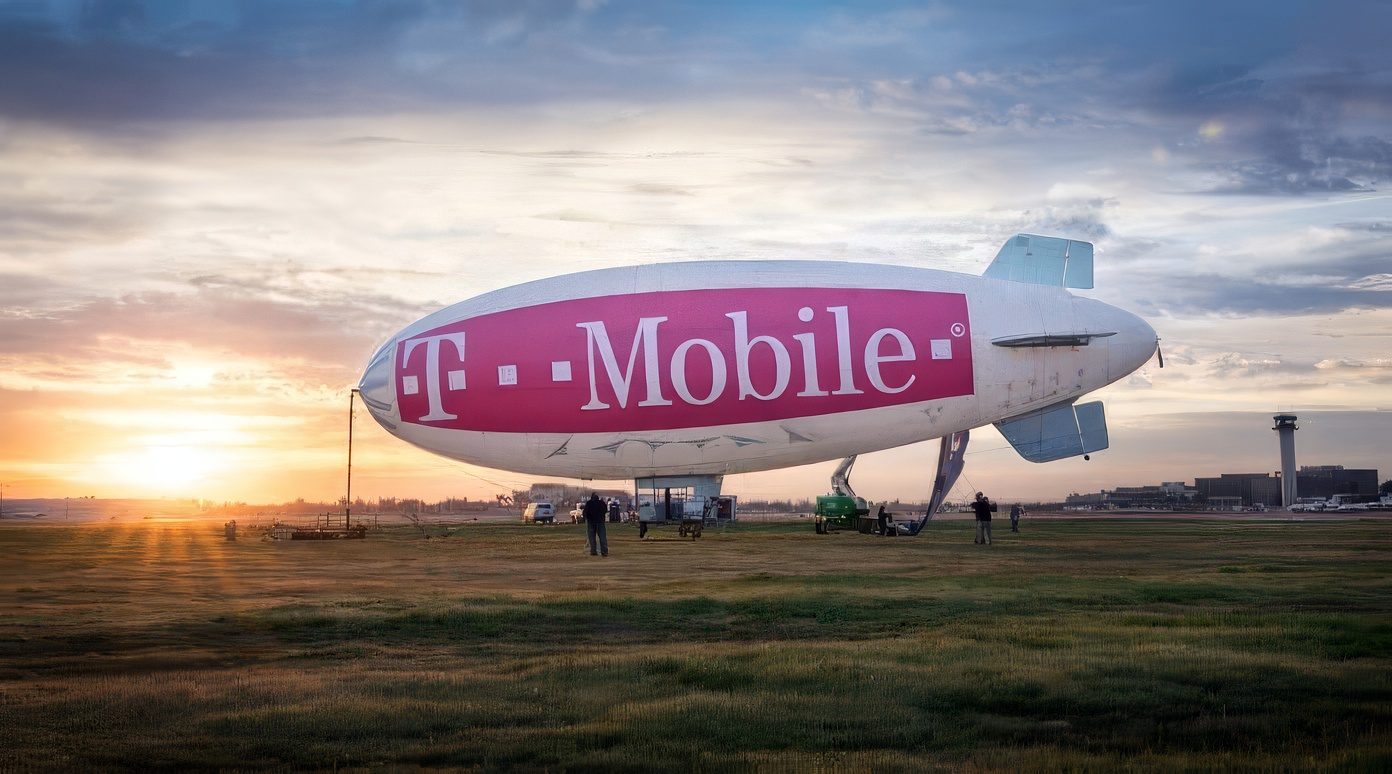
Most brands measure a campaign in impressions. T-Mobile decided to measure one in world records. Two of them. In a single afternoon. And the whole spectacular thing hung from one of our airships.
Here's the setup. Out at Lake Elsinore, we rigged a Skyship blimp to tow a water-skier — and then went for the record books. First: the greatest distance ever water-skied while towed by a blimp. Then, because one record apparently wasn't enough, the fastest text message ever sent on a touchscreen phone while water-skiing behind that same blimp. (Yes, really. Read that twice.)
It's the kind of gloriously ambitious stunt that only aerial advertising makes possible. You can't do this with a billboard. You physically cannot do it with a pre-roll ad. It takes an airship — and a team that knows how to fly one with a human being on skis attached to the back.
Why records beat impressions
Let's talk about why this was smart, not just wild. When you set a Guinness World Record, you don't buy coverage — you earn it. News outlets write about world records. People share world records. The Guinness name itself lends the stunt a stamp of legitimacy no ad budget can purchase. One blimp, one afternoon, and suddenly T-Mobile isn't running an ad — it's the subject of a story the media is happy to tell for free.
That's the quiet genius of blimp advertising. A great airship campaign doesn't just reach an audience. It generates the news the audience is already looking for. The stunt becomes the content. The brand becomes the headline.
The blimp made it possible
None of it happens without the ship. The airship is what turned "we'd like some buzz" into "we set two world records and everyone's talking about it." It's the platform, the spectacle, and the reason cameras showed up — all at once. T-Mobile brought the ambition. We brought the altitude to pull it off.
Now picture that engine working for your brand. You don't need a water-skier — you need a moment worth talking about and an airship big enough to make it real. Aerial advertising is a stunt machine: it makes the improbable possible and the possible unforgettable, which is exactly the raw material the press and the public are hunting for.
And the reach compounds. The stunt happens once, but the coverage runs for weeks — news write-ups, social clips, the record listing itself, all pointing back at the brand brave enough to try it. That's the beauty of blimp advertising: you pay for one spectacular day and collect impressions long after the ship has landed. Millions of them, earned rather than bought.
The lesson translates to any brand bold enough to use it. Airships make ambitious ideas achievable and ordinary campaigns unforgettable — and the bigger the swing, the bigger the earned coverage that follows. T-Mobile turned a lake, a blimp and a water-skier into two world records and a mountain of press. Point that same aerial advertising firepower at your brand's next launch, and watch how quickly a good idea becomes a great story.
Earn the headline, don't rent it.
Aerial advertising doesn't just buy impressions — it manufactures moments the press and the public actively want to share. A blimp makes the impossible stunt possible, and the impossible stunt makes the news.
Now picture your brand up there. That's what an airship does — it launches you sky-high: millions of impressions, viral by nature, impossible to scroll past. Not an ad people tolerate — a moment they can't stop sharing. And Skyship Services owns and operates the fleet, so one team takes you from the first call to the final flight.